Cecilia: You took the first $225 Film Experiment workshop in 2001, signing up together with Jenny Bisch, who was already your friend at that time. How did you hear about the workshop. Did you have a connection to the Film Group before the workshop?
Allison: I first went to the Film Group when I was in high school. I think it was in grade 9 or 10 – so maybe 1994? It was a “take your kid to work” career day, but I wanted to become a filmmaker. I decided to pull out the white pages and look up “film,” but all I could find were movie theatres and the film classification board – but then I found the Film Group.
So I picked up what phone and called them and asked them if I could spend the day there to learn what a filmmaker does. They told me that there just happened to be a woman filmmaker making a film in their studio, and did I want to spend the day with her? And I said yes.
It was Shereen Jerrett who was shooting a short film in the studio. She was doing a stop-motion animation with cardboard cut-outs, and so I got to hang out with her and cut out cardboard, which I thought was very cool.
And after that, I started going to watch films at the Cinematheque. But it was only after I graduated university years later that I started taking workshops at the Film Group. I don’t know how I specifically found the $225 Film Experiment class, but it looked pretty cool and so I signed up for it. I likely picked up a newsletter at the Cinematheque.
And, yes, I already knew Jenny Bisch from university, so we decided to sign up for it together.
And actually, I know that I told you before that I didn’t finish a film through the 225, but Jenny reminded me that I did. And so I’ve been looking for it and I found the miniDV tape. I somehow got the film transferred to miniDV at the time and finished editing it digitally.
Cecilia: So you did actually finish a film?
Allison: Yes, I did. I just saw Jenny last night. She has a stronger memory about the workshop than I do and she told me that I definitely did finish a film, so that’s why I went looking for it. It’s called Tempt.
I think I had just gotten a computer, and so I decided to edit it digitally. I was a late adopter to owning a computer. But I don’t know for sure if it’s finished or not. I’ll need to find a way to look at the miniDV tape.
Cecilia: It’s interesting that you say you entered into the Film Group in the mid 1990s, because that was exactly the time when it was going through some really significant financial problems. It was also going through executive directors, until it found Larry, and he lasted a little bit longer.
A lot of women described the organization at the time as very unwelcoming, however you describe being pretty easily welcomed when you made that cold call about wanting to spend the day there.
Allison: I think it was 1994 and I may have spoken to Jeff Erbach. Would Jeff Erbach have been there at the time?
Cecilia: He might have been production coordinator at the time. I know he worked at the Film Group at two different times – first as the production coordinator, and then he left and returned a few years later as the part time training coordinator.
Allison: I was only down there for that one afternoon. That was my only experience at the time. It worked out because Shereen just happened to be working on her film there on the exact same day. And after that, it was only many years later that I returned again, after university.
Cecilia: What did you study in university?
Allison: I graduated with a BA in Theatre from the University of Winnipeg.
Cecilia: So you and Jenny both went to the U of W?
Allison: Yes, we met there, but we weren’t in the same classes. She was taking Anthropology, but we had mutual friends and that’s how we met.
I was studying stagecraft at the U of W. I was studying anything to do with props, lighting and other stagecraft classes. I was interested in filmmaking, but at the time there was nothing in Winnipeg for that. The U of M only had film appreciation classes.
That’s why I went to the Film Group after graduating – to learn more about film, specifically. I didn’t really have any time while I was in school. But after I graduated from university, I was able to return to the Film Group, and the $225 Film Experiment happened not too long after that.
Cecilia: What was the experience of the workshop like for you? Do you have any memories of that time? I recall that you and Jenny were working together and helping each other make your films.
Allison: Yes, we helped each other on our films. I helped her on her film and she helped me with in mine. I didn’t really have a story in mind like Jenny did, so I decided to just go around and shoot some stuff, whatever came to my mind.
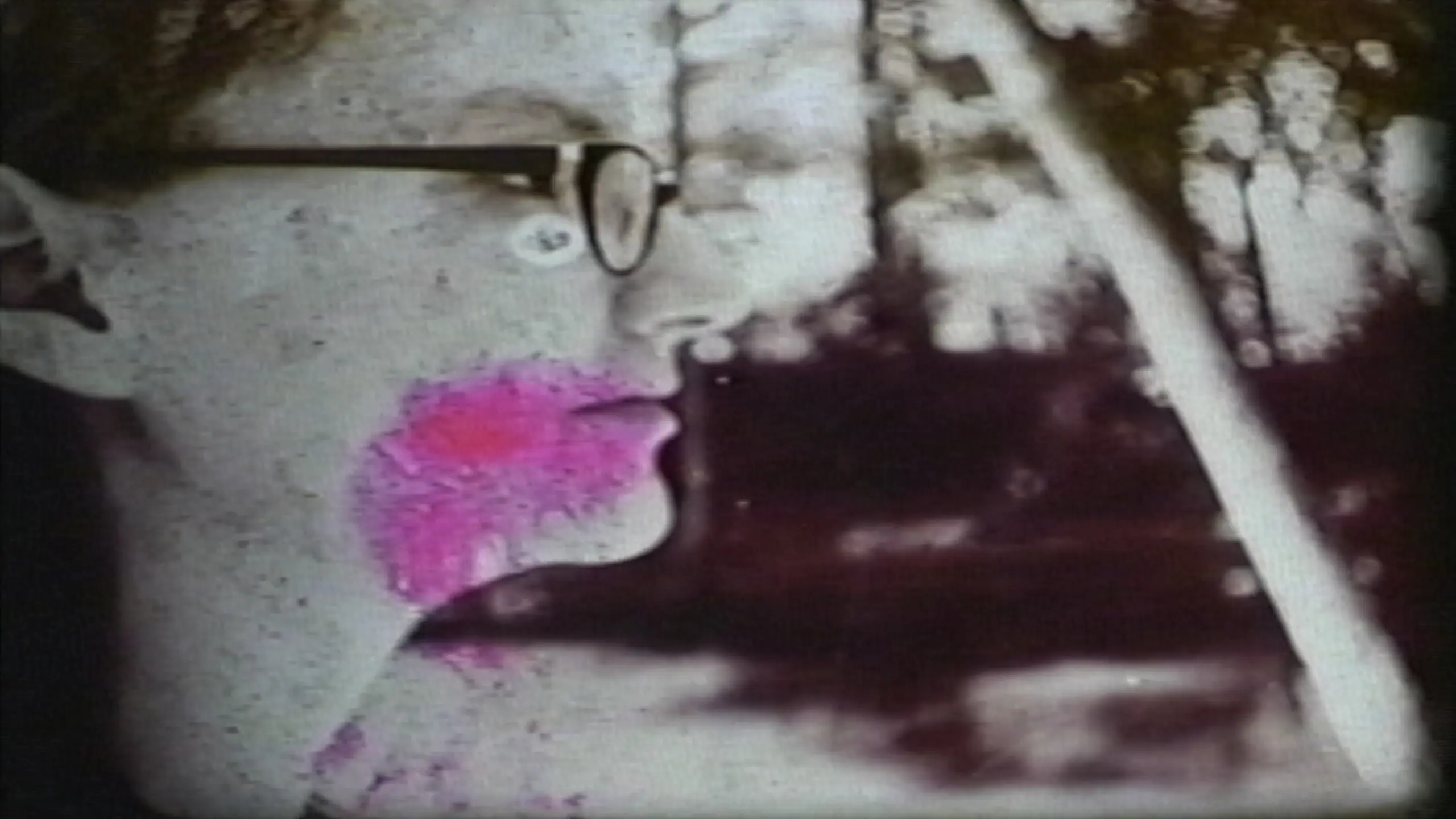
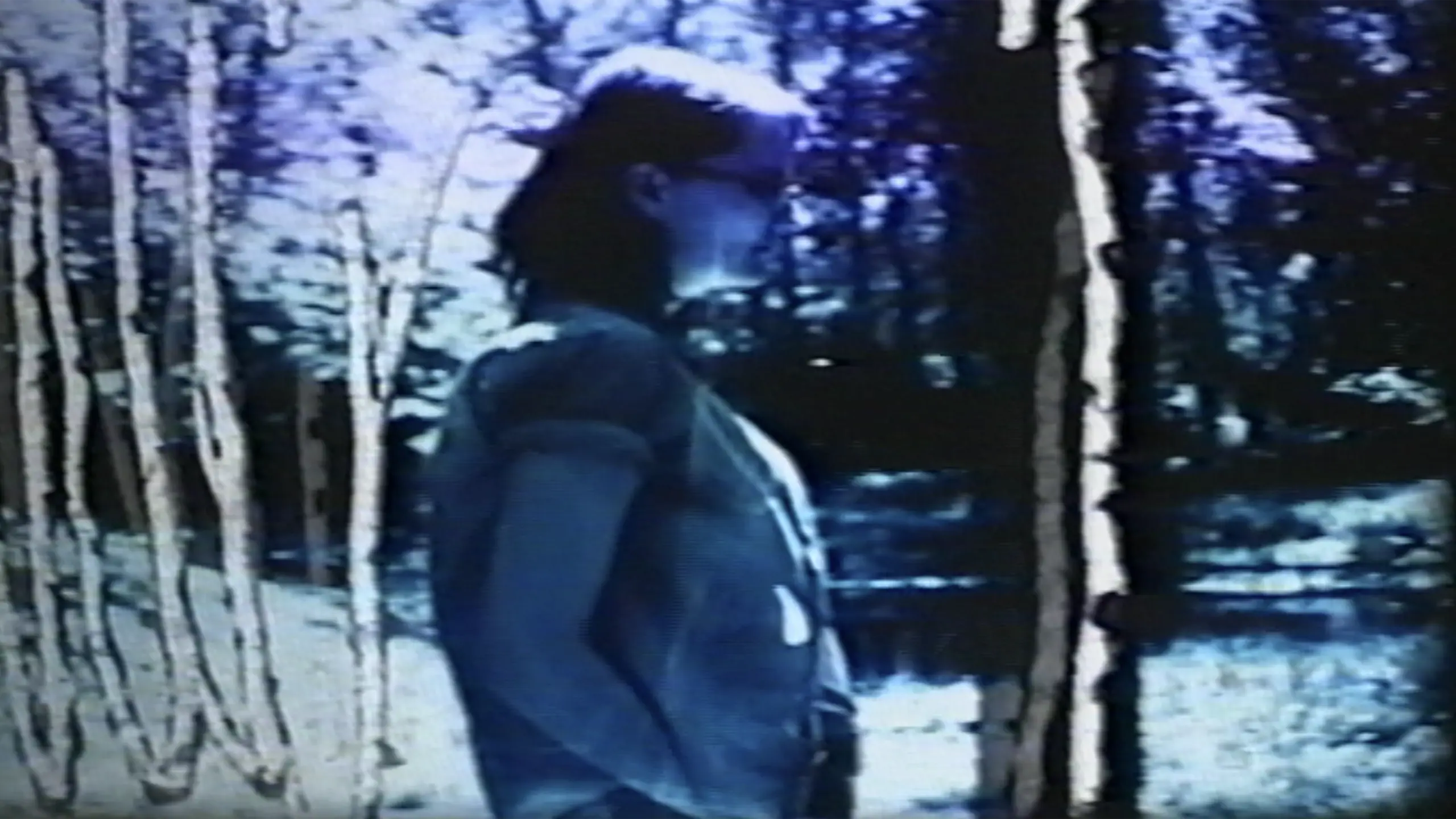
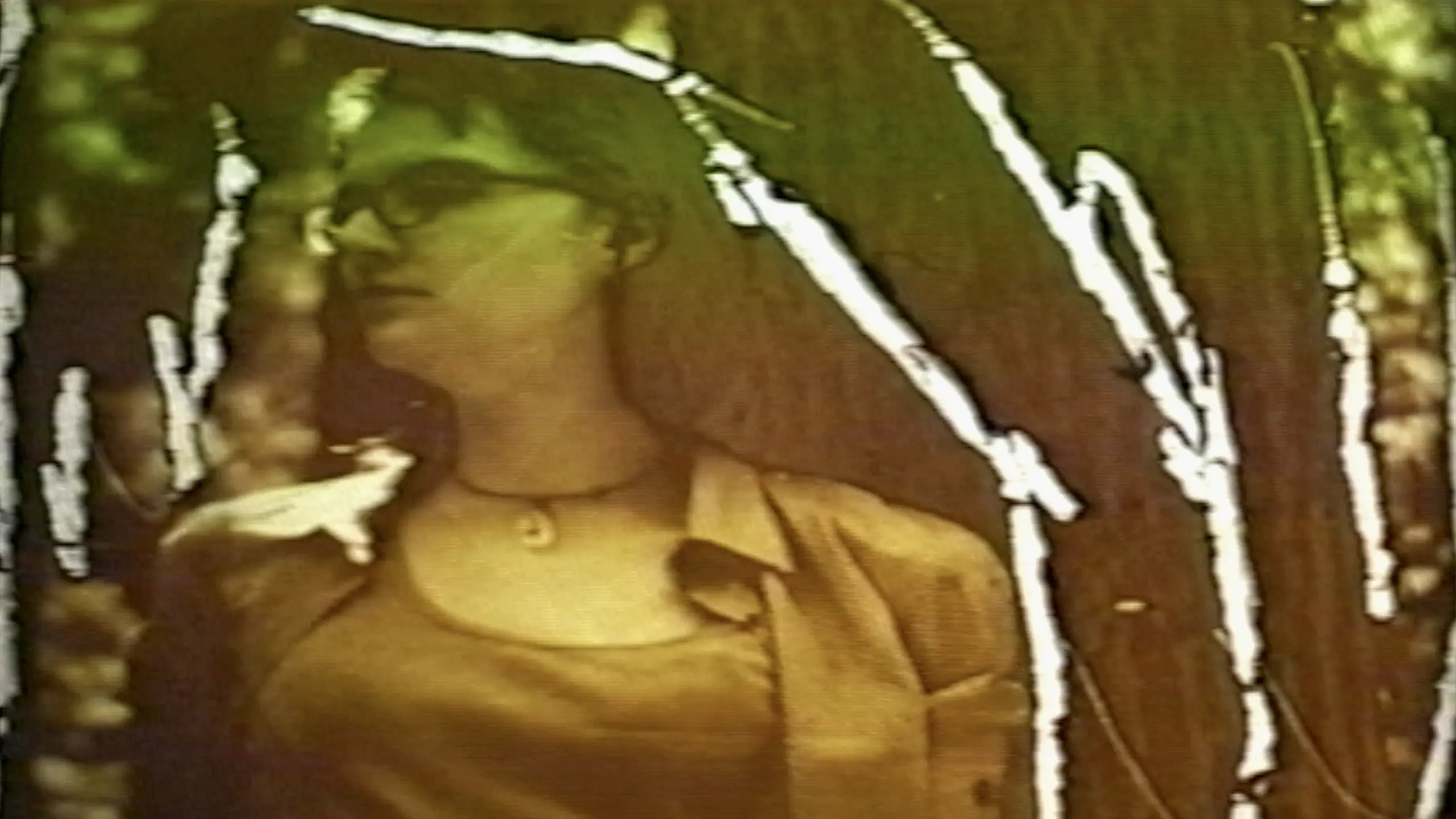
We ended up going to Kildonan Park. I brought marshmallows with me, and I filmed Jenny eating marshmallows. After that, I think we went around the park and filmed some nature shots and us just walking around.
I also went off on my own and shot some things by myself. I was still learning how to use the camera and how to load it, and so I think I may have accidentally exposed some of my film. I was definitely still learning. For me, it was a learning experience on how to handle the gear and load the camera.
When Jenny was shooting her film, I think I shot the portions when she was acting in it, if I recall correctly. I think we went out to the country. We definitely went out to the beach to shoot with Ian Mozdzen – I remember Jenny had wanted to go out to Gimli, so I have that memory as well.
Cecilia: And how about the workshop time itself? Do you remember the instructors and the other students?
Allison: I remember that it was a really interesting and fun group, and I had a really good time learning. I definitely remember Sol Nagler and John Kapitany.
Looking back on it, I think we were the guinea pig test group, because it was the first time they’d ever run a workshop like that before. They gave our group so much film. I didn’t even know what to do with it all.
Cecilia: Yes, I think we might have gotten six rolls. I agree that it felt like a lot for mostly first-time filmmakers. I think they cut back on the film the next year, and they also increased the price to $255.
Allison: I also remember that we were hanging out in the studio for so long during the tinting and toning. We were there for days, just making a mess of the place. Everything was covered in glitter and glue and dye. We were definitely given a lot of free rein.
Cecilia: And how about the time hand-processing?
Allison: I definitely enjoyed that. I think I was successful at that.
Cecilia: I remember that we used film stock that was not red-light safe. It was before they came out with a red-light safe version of that film, and so we had to spend hours in total darkness. I kind of lost sense of space and time in there. There was definitely a psychological effect being in darkness for hours and hours just because there was so much film stock to process and because we were using buckets and not tanks.
Allison: Definitely. I think at the beginning, there was some trial and error working through that process, but you eventually found your rhythm.
Cecilia: I still hand-process my films to this day, but I only go to negative at this point. And with the 225, we went to reversal, which takes so much longer to develop. I think it might take twice the time. Looking back at the chemistry planning involved for that class – I think that was John Kapitany’s role. Well, it would have been a very demanding workload for him. It was not just the preparation, but also going in between all of the students and assessing the chemistry and refreshing it when needed.
I also remember that the workshop took a lot of time. It was about two months, with both group classes and independent work. How did you find the workload?
Allison: Was it 2002?
Cecilia: Yes.
Allison: Well, I’d decided to quit my job just before that and I had a bit of savings. That’s why I decided to do some things that I hadn’t had the chance to do before then, and ultimately that’s why I decided to take the course.
I also took the Basic Filmmaking workshop at the same time – so I was taking both it and the 225 both simultaneously. I’d just decided to do everything in 2002 that I’d always wanted to do but had never had the chance before. Before that, I had been so focused on what I needed to do to graduate from school. And then it was just work, work, work. So, I decided to quit the boring day job I’d at the time and instead spend my time exploring things I’d always wanted to explore.
Cecilia: And you got a computer obviously, around that same time, if you finished your film digitally?
Allison: I wish I knew how to look at the tape.
Cecilia: Oh, that’s pretty easy. I can send it out to get transferred.
Allison: OK. Well, I had an iMac with iMovie, and I was just playing around with that. I took some classes on Final Cut Pro at the Film Group later on, and after that class I got another computer and Final Cut Pro for myself. But I started with iMovie.
Cecilia: For my film, I cut it by hand and did no digital editing. I also think Jenny cut her film by hand also. So you must have done some cutting by hand with a Steenbeck, to have something to show at the final class.
Allison: Yes, I think that’s what I did. I edited my film on the Steenbeck to finish the class, and then later on had it transferred to miniDV somehow and fine-tuned the editing in iMovie.
Cecilia: Throughout 2002, were you trying to find a pathway into filmmaking? Were you looking to become a director? Was that year about launching yourself into a new stage in your life?
Allison: It was because I’d always wanted to study film and I couldn’t go to film school. So, spending some time studying film just made sense to me.
Cecilia: At WNDX this year, we screened Prying Mantis Upskirt, which was a film that you and Jenny made together. At the artist talk at WNDX you had said that you were sharing a studio at the time. Was that all part of the same process?
Allison: No, the studio came a bit later. We got the studio around 2006. And that was because I had a small apartment at the time and didn’t have any room to make work. And so we were able to spread out there and work on our animation projects. And we spent a day shooting Praying Mantis Upskirt that way.
Cecilia: And you have another film from around the same time called Afternoon?
Allison: Yes. After the 225, I just made the film Afternoon with my own super-8 camera. At the time, I liked going to second hand stores and buying super-8 cameras, and so I had a few at the time.
And so I made that film in an afternoon in my apartment with my friends Cara Kolt and Ian Mozdzen, using a painter’s light. I sent that film for processing and transfer, and then edited it on iMovie as well. And my partner did the score, and that’s how I got that film made. Well, I shot it in 2004, but it took a while for me to finish it.
Cecilia: You and Jenny worked together for a period of time, and obviously you’re still friends. But you did move onto different things professionally. Jenny’s a lawyer now. Have you made any more work since that period?
Allison: No. I think I just got busy with work.
Cecilia: For me, the 225 was a milestone workshop because there are so many women filmmakers who emerged from it. It was also a generational shift into a new kind of filmmaking that was much more personal.
I’m not saying the shift was a dominant shift, because filmmakers were still working in crew-based forms after that. But it was an important expansion where the organization was no longer only focused on crew-based forms exclusively. There was an expanded way of looking at filmmaking that wasn’t just focused on conventional forms anymore.
Allison: Well, the 225 was a really great experience for me because, as I mentioned in my artist talk at WNDX, I really love being hands-on with my work. I’m more of a tactile arts and craft person. I grew up sewing and building things with my hands. And so when I found a way of working like that on film, it was easy to gravitate to that. It incorporated things like painting and sculpting and collaging. And so that’s why I ended up gravitating to that way of working.
I was an only child growing up, and so I was used to working in a more solitary way. Being on the experimental side of working meant that you could continue working in a solitary way. With conventional film, you have to work with so many people and I felt really uncomfortable with that working approach for my own projects – working with a large crew and people you don’t know. I felt most comfortable working in a more personal way and including a couple of friends in the process.
Cecilia: In that context, it’s interesting that you ended up working for Film Training Manitoba, which is focused on developing crews for the film industry. And you’ve worked there for quite some time now. Has it been around twenty years maybe?
Allison: Thereabouts, yeah.
Cecilia: You must have found a good pathway there to have stayed there for so long.
Allison: For me, it’s a way I found to still stay involved in the film world without needing to get another “day job.”
After working on those experimental films, I gravitated to costume department work. I participated in an internship program with FTM. They placed me on one of Guy Maddin’s films, and so that’s how I got started working on the other side of filmmaking, as a crew person.
Around the same time, in the early 2000s, I also got involved in organizing this woman’s feminist film festival for a couple of years, so I was always doing a bunch of different things. That festival was called Sugar + Splice.
Cecilia: Oh yes, I remember that festival. I think that was the second attempt to initiate a women’s film festival in Winnipeg within a span of a decade.
Allison: I was just cleaning out my computer and found a postcard I designed for the festival. That was in 2004 and 2005. And so, during those years, I was wearing multiple film hats.
Cecilia: I remember that Jenny was also involved in Sugar + Splice, is that correct?
Allison: Yes, she came in and helped me. And then I think it kind of just petered out in 2006. A lot of the women involved were in Women’s Studies at the U of W and I got involved with them. I don’t remember how I met them, however. They had already organized the festival for a year before I came in and joined them. Then I took it over and Jenny came and helped me.
That original group was focused more on screening social justice films, whereas Jenny and I were focused on female artists. And so it ended up being a mix.
Cecilia: It’s so interesting, because that wasn’t the first time that people tried to get a women’s film festival off the ground. That I know of, in the mid- to late-90s there was also another women’s film festival called Re:Visions that Laura Michalchyshyn was hired to coordinate. She was very young then, and obviously has since gone on to much bigger things. It’s interesting that there were these similar small initiatives that were repeated but never really stuck.
Allison: For the last year of Sugar + Splice, it was Jenny and I, and two other women. I think that was in 2005 or 2006. One of the other women was Allison Brickey, who is an English professor at the University of Winnipeg. I wish I could remember more about that organizing group.
Cecilia: Yes, that’s the difficulty of the pre and early digital age. A lot of that history is based on our memory of things that happened twenty years ago, as we have not much else to go on.
Do you have any other reflections about that time and your filmmaking work? You and Jenny obviously had a lot of aesthetic connection with your practices.
Allison: I think it was a time in our lives when we were interested in experimenting with different things and to learn new things.
I like to collect. I still do. I collect photos and other images. I have boxes and boxes of clippings. I would find inspiration through magazine clippings and use that for collage artwork projects. So at that time, I was very much in the mindset of wanting to collect images.
And then I used those to learn how to use Final Cut Pro, to be able to merge my interest for arts and crafts, to be able to work with those digitally. So, taking scanned photos and images and just animating them – figuring that out on my own.
And back to the 225 – I remember that it was a very interesting group and process. I remember you and Danishka Esterhazy and Mike Maryniuk. And Jenny reminded me yesterday that Robert Pasternak was also in the workshop. I wonder who else was in that group?
Cecilia: There was also a fellow named Rob Haacke. He made another film after that one that he made while in Africa, and so I remember him more for that. So, including Deco Dawson, who started the workshop but dropped out – that makes eight people, and so that sounds right for the number of people for that kind of class.
We had the final class screening in the studio. I have a strong memory of that. It was all so new to me, and so it really left a strong impression.
Allison: It was the same for me. I didn’t know what to expect, but I enjoyed the experience. I remember using the Steenbeck to splice the film together and then using a marker to write in the credits at the end. I was just going through the process as it came before me.
Cecilia: Can I get your tape to have it transferred? The problem is that it’s been about 25 years now, and so it might just be static. Tape doesn’t last as long as film. But I think it would be worth the effort.
Allison: OK, sure.
Cecilia: Now that I’m thinking about it, I remember that they gave us a VHS of the final screening. There was somebody in the back of the room taping the screening – maybe Jeff Erbach – and they turned that into a group VHS that they gave out to everybody. I think the tape was called Film Exposure.
I have a bunch of old VHS tapes kicking about, so I’m going to see if I can find it here in my house. Hopefully there’s still an image on it and it isn’t just static by now.
Allison: I have a whole bunch of weird Film Group stuff from that time in my basement, so I’ll have a look to see what I can find.
Cecilia: OK, great. We’ll chat more later.